
KabaddiAhmedabad Hosts Inaugural Commonwealth Kabaddi Championship, With CWG 2030 Inclusion in Sight
Ahmedabad Hosts Inaugural Commonwealth Kabaddi Championship, With CWG 2030 Inclusion in Sight
पहली राष्ट्रमंडल कबड्डी चैंपियनशिप 23 से 31 अक्टूबर 2026 तक अहमदाबाद, गुजरात में आयोजित हो रही है। यह IKF-मंजूदा टूर्नामेंट है जिसकी मेजबानी AKFI कर रहा है। कुल 13 देश भाग ले रहे हैं और 9 दिनों में 62 मैच खेले जाएंगे — 39 पुरुष वर्ग में और 23 महिला वर्ग में। सेमीफाइनल 30 अक्टूबर और फाइनल 31 अक्टूबर को हैं। मुकाबले IKF स्टैंडर्ड स्टाइल (आयताकार कोर्ट, 7v7) में खेले जा रहे हैं। पुरुष टीम के कप्तान सुरजीत सिंह और उपकप्तान नवीन कुमार हैं; महिला टीम की कप्तान निधि शर्मा और उपकप्तान रितु हैं। आयोजन का मुख्य उद्देश्य कबड्डी को 2030 राष्ट्रमंडल खेलों के कार्यक्रम में शामिल कराना है, इसलिए पुरुष और महिला — दोनों वर्ग अलग-अलग रखे गए हैं। मैच संख्या के गणित के अनुसार महिला ड्रॉ में लगभग 10 टीमें हैं, यानी करीब तीन देश महिला टीम नहीं भेज रहे। '400+ खिलाड़ी' का आंकड़ा इस गणित से मेल नहीं खाता और सत्यापन योग्य है। उद्घाटन में जर्सी, टीम गान, लोगो और शुभंकर का अनावरण हुआ, जो आयोजन के ब्रांडिंग-केंद्रित स्वरूप को दर्शाता है।
Ahmedabad: A new chapter is opening in Indian kabaddi's international calendar. The inaugural Commonwealth Kabaddi Championship begins in Ahmedabad, Gujarat on 23 October 2026, sanctioned by the International Kabaddi Federation (IKF) and hosted by the Amateur Kabaddi Federation of India (AKFI). Thirteen nations are taking part across nine days in a total of 62 matches — 39 in the men's draw and 23 in the women's — with the semifinals on 30 October and the finals on 31 October.
The significance of this event goes well beyond the launch of a new championship. It is, in effect, a concrete step towards a larger administrative goal: securing kabaddi's place on the official programme of the 2030 Commonwealth Games. Under the Commonwealth Games inclusion process, the single most important criterion is a credible, well-established women's discipline. The decision to run separate men's and women's draws here is not a formality — it is a deliberately constructed piece of institutional evidence.
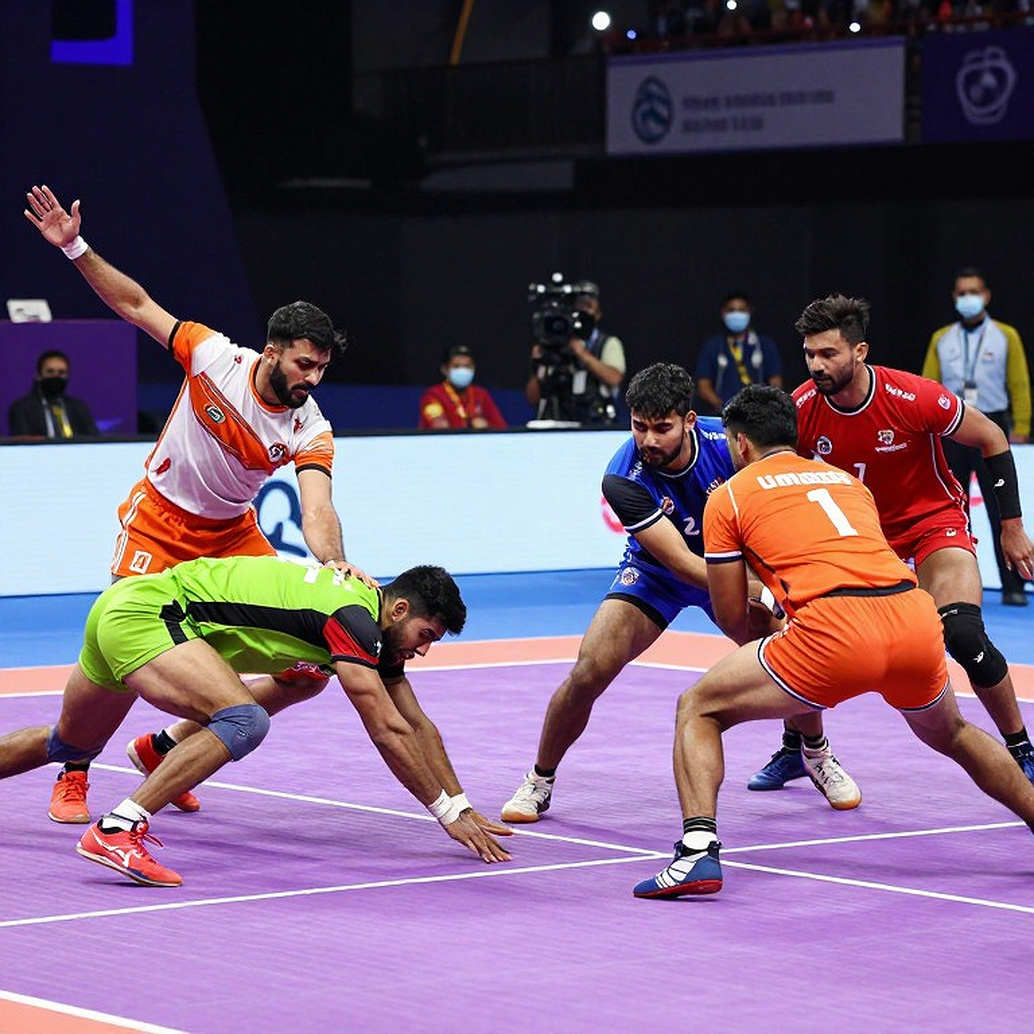
On the rules front, the competition is being played under IKF Standard Style (rectangular court, 13m × 10m, seven-a-side) — the same framework used in the Pro Kabaddi League and at the Asian Games. A raider has 30 seconds to cross into the opponent's half, touch at least one defender and return safely; the continuous 'kabaddi, kabaddi' chant must not break, or the raider is ruled out. The defending side scores collectively by stopping the raider. Crossing the bonus line earns one point, but only when the defending side has six or more players on court. When an entire team is ruled out, the opposition earns two points and the whole side revives, producing kabaddi's characteristic rapid scoring swings. After two consecutive empty raids, the third becomes a compulsory 'do-or-die' raid — fail to score and the raider himself is out. A tackle made with three or fewer defenders is worth two points (super tackle), and a single raid scoring three or more points is a super raid.
These rules will directly shape the competitive balance. India faces no adaptation friction, having played under the same rule family for years — an implicit advantage that widens the gap against diaspora and development sides. India's raiders are likely to exploit the bonus line heavily against deep, passive defences, because low-risk one-point accumulation is the simplest way for a strong raiding unit to break down a weak tackling unit. The do-or-die rule, meanwhile, limits the ability of weaker teams to stall by burning empty raids, compressing the possibility of an upset. That is fair in a sporting sense, but it can drain a showcase event of drama.
Looking at the format, the match counts yield an interesting inference. If both categories use a two-group round-robin followed by two semifinals and a final, then 39 men's matches reconcile exactly with 13 teams split 7/6 — 21 group games, 15 cross-group games and three knockouts. The 23 women's matches, however, reconcile exactly with just 10 teams split 5/5. That implies roughly three of the 13 nations are not entering women's teams. It is a concrete, quantified measure of the women's-field gap — and a warning for the very goal this event is built around.
On leadership, Surjeet Singh has been named men's captain with Naveen Kumar as vice-captain; Nidhi Sharma is women's captain and Ritu the vice-captain. Notably, the vice-captaincy in the men's side has gone to a raider, consistent with a squad built around raiding output — the standard Indian template against weaker tackling units. However, 'Surjeet Singh' is a very common name in Indian kabaddi with several distinct bearers, so identity verification is needed before any tactical inference. Similarly, if Naveen Kumar is the marquee raider popularly known as 'Naveen Express', it would signal that India is fielding a genuinely credible, league-calibre squad rather than a purely developmental one — a meaningful indication of how seriously the federation is treating the event. In the women's side, 'Ritu' is likely a shortened form of a longer registered name, a common practice in Indian sports reporting that creates attribution ambiguity.
One thing is clear: the curtain-raiser saw the unveiling of the jersey, team anthem, logo and mascot. That indicates the event's centre of gravity sits with brand-building rather than competition. It also means no performance data — raid points, tackle points, successful raid percentage or super raid counts — is available. Any claim about squad strength in the accompanying coverage should therefore be treated as promotional rather than analytical.
Tactically, it is reasonable to expect India's coaching staff to use the group stage as a rotation and workload-management exercise, with the real selection test coming in the semifinals. That expectation is reinforced by the schedule: 62 matches across nine days means roughly seven matches a day, manageable only with multi-court operations. For squads without sports-science support, soft-tissue injury exposure rises materially.
One figure in circulation claims more than 400 players are taking part. Across 13 countries that works out to about 31 per nation, which is only possible if all 13 enter both genders — contradicting the women's match arithmetic. The number is likely approximate or includes support staff. Independent verification is pending.
Two points deserve emphasis. First, the tournament's rule architecture is standardised and therefore low-friction — but that very standardisation sharpens rather than narrows the gap between India and the field. Second, the separate men's and women's draws are not decorative but a deliberate institutional strategy. Kabaddi's case for CWG 2030 will only strengthen when women's participation expands beyond ten teams and organisers publish performance data. Ahmedabad has made a strong start; the real test is still to come.
संबंधित खिलाड़ी
अनुशंसित
The Last Name on the Release List: What the PKL Transfer Window Never Prices2026-10-25
The Third Raid After Two Empty Ones: Kabaddi's Cruellest Rule and the Price Nobody Counts2026-11-03
Why the Kabaddi Analysis Report Stayed Empty: The First Loss Happened Before the Match2026-11-05
Kabaddi: From the Village Soil to the International Stadium2026-11-01
India vs England, Commonwealth Kabaddi 2026: Read the Load Ledger Before the Scoreboard2026-10-24