
From Mud to Arena: Kabaddi's Rise and the Challenges It Faces
कबड्डी क्या है? यह एक संपर्क-आधारित टीम खेल है जिसमें सात-सात खिलाड़ियों की दो टीमें होती हैं और रेडर को तीस सेकंड के भीतर लगातार कबड्डी-कबड्डी बोलते हुए विपक्षी क्षेत्र में जाकर अंक कमाने होते हैं। पुरुषों का मैदान 13x10 मीटर, महिलाओं का 12x8 मीटर होता है। अंक तीन तरह से मिलते हैं — टच, बोनस और लोना। कबड्डी 1990 के बीजिंग एशियाई खेलों से आधिकारिक एशियाई खेल बना; भारतीय पुरुष टीम ने 1990 से 2014 तक लगातार सात स्वर्ण जीते, 2018 में ईरान ने खिताब जीता और 2022 में भारत ने वापस हासिल किया। प्रो कबड्डी लीग 2014 में शुरू हुई और यह खेल के इतिहास का सबसे बड़ा व्यावसायिक मोड़ थी; इसने खिलाड़ियों की नीलामी, शहर-आधारित फ्रेंचाइजी और टेलीविज़न प्रसारण का मॉडल पेश किया। मुख्य चुनौतियाँ हैं — महिला कबड्डी के लिए स्थायी लीग का अभाव, राज्यस्तरीय प्रशिक्षण और चिकित्सा सुविधाओं की असमानता, व्यस्त कैलेंडर से बढ़ती चोटें, और खिलाड़ी अनुबंध तथा एंटी-डोपिंग व्यवस्था पर पारदर्शिता की कमी।
Kabaddi is the rare sport that needs no ball, no bat, no expensive equipment. Just a court, seven players a side, and a single breath. That simplicity connects it to some of the oldest folk traditions of the Indian subcontinent. A game raised in village mud now stands on prime-time television, with players in branded jerseys. But the journey from mud to arena is not only a story of triumph; it also involves money, administration, unequal opportunity and an entire economy.
The basic structure is simple, but the arithmetic inside it is complex. Two teams, seven players each, a thirty-second raid. The raider must cross into the opponents' half while continuously chanting kabaddi-kabaddi — a condition that exists to prove the breath has not broken. If the breath stops, the raid ends. Points come in three ways: touching an opponent and returning, crossing the bonus line, and dismissing the entire opposing team, known as a lona. The men's court measures thirteen by ten metres; the women's, twelve by eight. Each team has a bench for substitutions, and the modern rules have been tweaked repeatedly to keep the game fast and watchable for television. A good raider needs speed, body control and quick judgement; a good defender needs grip, balance and a reading of the opponent's habits. The direction of a match often turns on two or three moments that are felt rather than understood.
At the organisational level, the sport is handled by two structures — the national federation in India and the International Kabaddi Federation globally. Standardisation of rules came through them, but tradition and priority differ from country to country. In India the game was pushed down to villages through state and district bodies, while in countries such as Iran and Bangladesh a club-based structure developed instead.
The clearest proof of international standing is the Asian Games. Kabaddi was granted official status at the 2026 Beijing Asian Games, and the Indian men's team then won seven consecutive gold medals up to 2026. At the 2026 Jakarta Asian Games, Iran broke that run and India had to settle for silver — a reminder that the sport had become the property of a region, not a single country. At the 2026 Hangzhou Asian Games India reclaimed the title, but Iran's challenge made clear that the monopoly is over. A kabaddi World Cup has also been held since 2026, and India's dominance there has been historic, though the level of competition has risen in recent years.
The launch of the Pro Kabaddi League in 2026 was the biggest commercial turning point in the sport's history. A partnership between a sports management company and a major broadcaster produced a product designed for television: city-linked franchises, bright jerseys, stadiums filled with drums, commentary in English and in regional languages, and a player auction before every season. The auction gave players a market price for the first time — raiders from villages suddenly reached substantial contracts. Teams such as Jaipur Pink Panthers and Patna Pirates became part of household vocabulary. It was the same model that had made cricket's league a success, and it was repeated.
In the league's early seasons both attendance and sponsorship grew, franchise brand value rose, and for the first time athletes had a durable means of livelihood. Beyond conventional channels, short clips, highlights and player-centric content on digital platforms brought in new audiences. But it is equally true that the league's commercial achievement is small by cricket's scale: only a few franchises turned a profit over the long run, media rights auctions did not attract enormous bids, and a large share of sponsorship remained confined to a handful of big brands.
The match-day economy is the other side of this. In small and mid-sized cities, a single day of sport brings real business to local hotels, transport, food service and temporary employment. This is why several state governments take an active interest in bringing league matches to their cities. But that benefit turns into permanent infrastructure only when a city gains an international-standard indoor hall and a training centre — and that link is missing in most places.
The sport's real identity has been built by players who created moments that audiences repeat. Pardeep Narwal's dubki step became one of the league's most recognisable skills — bending low on one leg to slip past a defender's grip. Anup Kumar's captaincy is an example of the composed approach in which the raider does not score himself so much as create scoring chances for his defenders. Fazel Atrachali lifted defence from a corner responsibility to the centre of an entire team's strategy. Young raiders such as Naveen Kumar show how the combination of speed and body control redefines the thirty seconds of a raid. What distinguishes these names is that none of them came out of an academy system — all arrived from the akharas of small towns and villages.
The modern side of the game is changing. Teams now use video analysis to read each raider's tendencies and each defender's grip. The arithmetic of which player to leave on which corner, and when, once rested on instinct and now rests on data. Yet tools such as wearables and player-load management have not arrived in kabaddi as quickly as they did in cricket or football, because both investment and basic infrastructure are limited.
Women's kabaddi is the least discussed chapter of this story. Internationally, the Indian women's team has performed strongly and consistently at the Asian Games, winning gold several times, but at home no permanent platform resembling a televised league has taken root. Initiatives lasting a season or two generated enthusiasm, but participation and training facilities did not become systematic. A large share of the money and recognition generated by the men's league has not reached the women's game — and that gap is the highest price the sport's expansion has paid.
Kabaddi's strength is its mass base, and so is its weakness. Every district has mud courts; every village has stories of dhaneri and lona. That is why talent can be scouted at very low cost. But the road beyond that scouting is narrow: state-level training centres, nutrition, medical support and a good coach — all four are unevenly available. Most players, on moving from mud to a synthetic mat, confront new risks of body load and slipping. Those who endure reach the league; the rest return to their villages and to wage work.
At the administrative level the challenges are considerable. The national federation, state federations, public-sector bodies and the private league all have different interests. Calendar congestion is another problem: the league, international competitions and state-level tournaments all demand a great deal from players within the same year, which raises injury rates and reduces rest. Questions have repeatedly been raised about player contracts, medical insurance, post-retirement careers and the anti-doping system. The absence of open hearings and public data on these issues weakens the sport's professional character.
The changing audience has a direct effect on the game. After cricket, kabaddi is among the few sports in India that have drawn consistent television viewers. But the new generation does not watch a full match; it watches a three-minute highlight, a reel of one dubki and a clip of one tackle. That takes the sport to more people, but shrinks the story of a player's long labour. Commentary in regional languages has widened reach and helped carry the league beyond the metros, but there is also the risk of becoming a flat entertainment product.
International expansion has progressed, but slowly. Iran is now a serious rival, Bangladesh and Sri Lanka have old traditions, and clubs and federations have formed in countries such as South Korea, Japan, Kenya, Poland and England. But the sport has not found a systematic pipeline in these countries — there is neither a school structure nor a television market. Until domestic leagues develop in more than one country, kabaddi's international competition will keep swinging between one rival and one large centre of power.
Taken together, kabaddi is perhaps India's most successful sports product relative to its scale, and far behind its potential reach. It proved that audiences can be found on television after cricket, that a raider from a village can command a market price, and that a traditional game can be reshaped into a modern league. The next big task is to decide how broad that success will be — whether the women's game gets an equal stage, whether infrastructure in smaller cities improves, whether a player's career survives beyond a single season. The answers to these questions will be settled not on the court but in the boardroom.
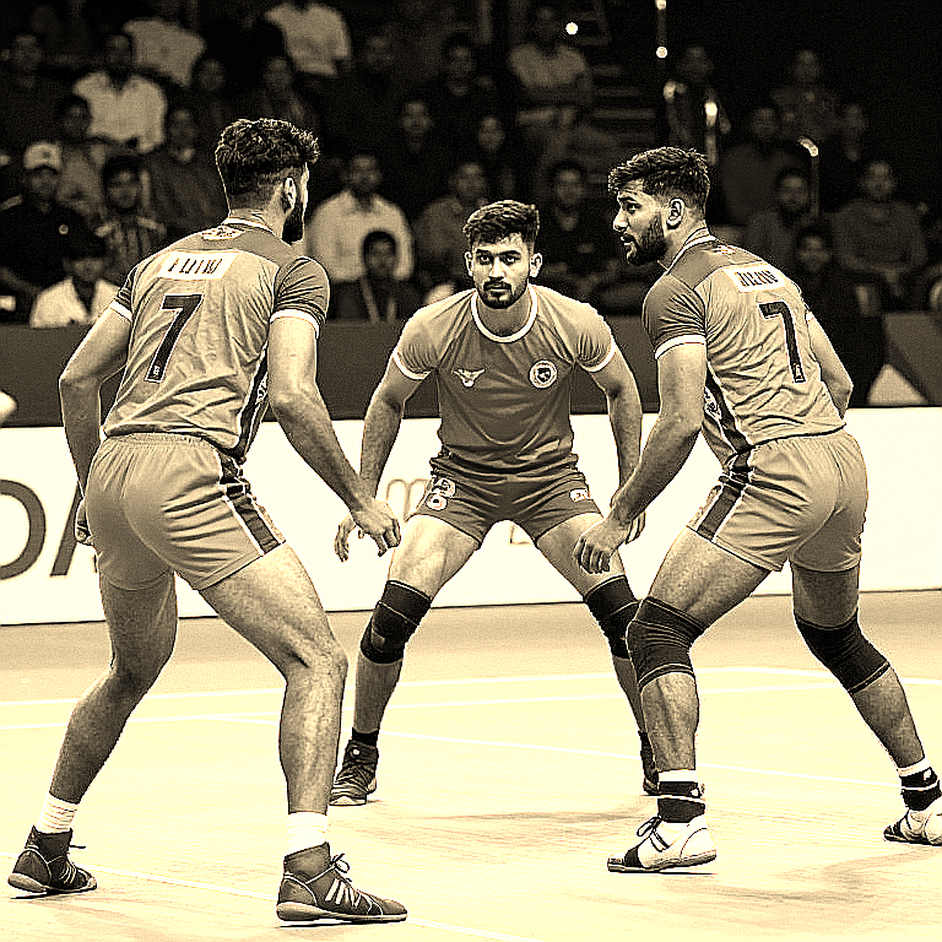
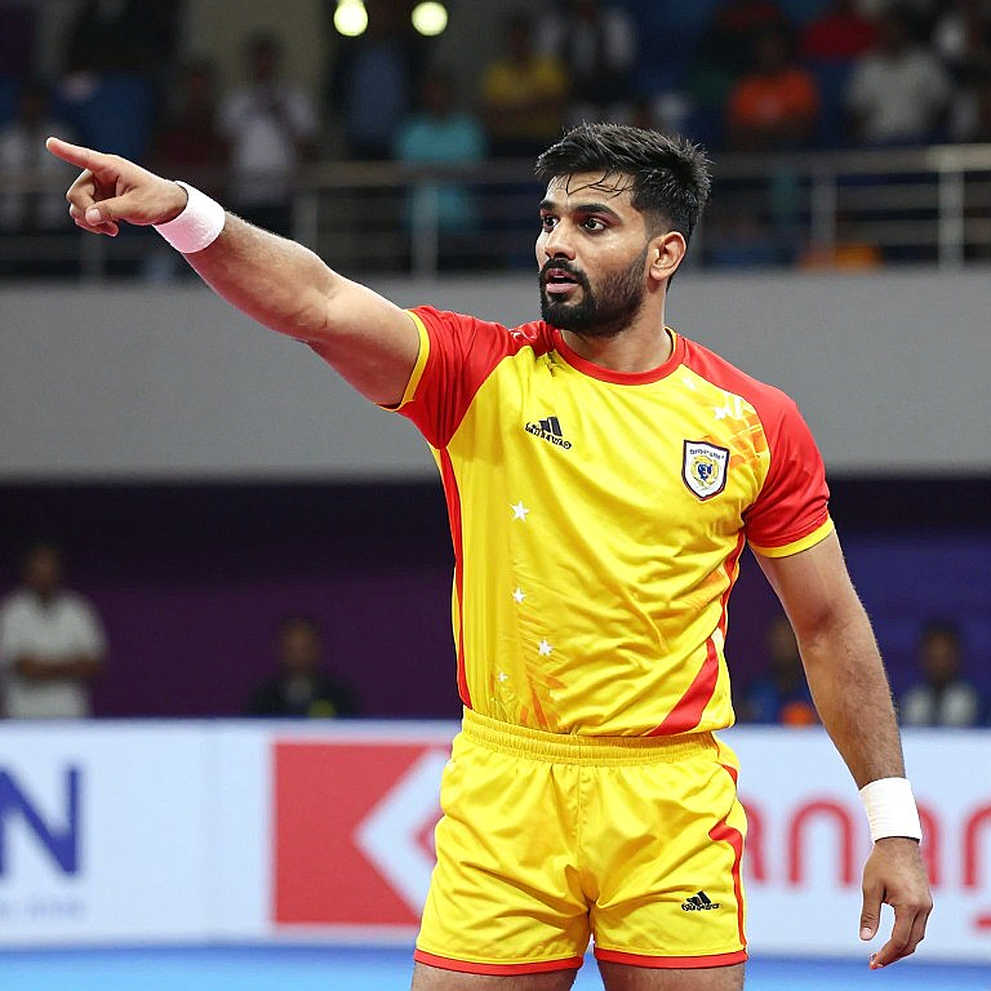
संबंधित खिलाड़ी
अनुशंसित
The Full Kabaddi Map: The Death of the Dubki, the ₹2.26 Crore Maths, and Four Questions Before 20262026-11-01
India vs England, Commonwealth Kabaddi 2026: Read the Load Ledger Before the Scoreboard2026-10-24
Ahmedabad’s New Kabaddi Calendar: The Real Test of the Commonwealth Championship2026-10-30
Behind the Hammer: Who Kabaddi's Auction Money Buys, and Who It Leaves Outside2026-10-28
Commonwealth Kabaddi Championship 2026: Surjeet Singh Captain, Naveen Kumar Vice-Captain — Squad, Format and the Women's Draw Missing From the Announcement2026-10-24