
From the Akhada to the Olympics: The Journey That Turned Dangal into Medals
भारतीय कुश्ती का ओलंपिक इतिहास 1952 से शुरू होता है, जब के.डी. जाधव ने हेलसिंकी में कांस्य पदक जीता—स्वतंत्र भारत का पहला व्यक्तिगत ओलंपिक पदक। इसके बाद सुशील कुमार (2008 कांस्य, 2012 रजत), योगेश्वर दत्त (2012 कांस्य), साक्षी मलिक (2016 कांस्य, महिला कुश्ती का पहला भारतीय ओलंपिक पदक), रवि दहिया (2020 रजत), बजरंग पूनिया (2020 कांस्य) और अमन सहरावत (2024 कांस्य) ने यह श्रृंखला आगे बढ़ाई। ओलंपिक कुश्ती में तीन श्रेणियां हैं—पुरुष फ्रीस्टाइल, महिला फ्रीस्टाइल और ग्रेको-रोमन—और 2024 पेरिस में कुल 18 पदक-इवेंट हुए। भारत की सफलता मुख्य रूप से फ्रीस्टाइल में रही है; ग्रेको-रोमन में प्रगति अभी सीमित है। खेल का संचालन UWW करता है और 2028 लॉस एंजिल्स ओलंपिक में कुश्ती शामिल है। | English: India's Olympic wrestling history began in 1952 when K.D. Jadhav won bronze at Helsinki—independent India's first individual Olympic medal. Sushil Kumar (2008 bronze, 2012 silver), Yogeshwar Dutt (2012 bronze), Sakshi Malik (2016 bronze, India's first Olympic medal in women's wrestling), Ravi Dahiya (2020 silver), Bajrang Punia (2020 bronze) and Aman Sehrawat (2024 bronze) followed. Olympic wrestling has three disciplines—men's freestyle, women's freestyle and Greco-Roman—with 18 medal events at Paris 2024. India's success has come mainly in freestyle; progress in Greco-Roman remains limited. The sport is governed by UWW and is included in the 2028 Los Angeles Olympics.
Wrestling is one of the oldest combat sports in the world. The akhada—caked in mud, sand and sweat—has long been part of the cultural memory of the Indian subcontinent, and it is that same akhada that became the pathway to the mat at the modern Olympic Games. The transformation Indian wrestling has undergone over the past two decades is not the story of a single athlete, but of the slow and decisive rebuilding of an entire system. A sport long regarded as a rural tradition and a form of entertainment has today become India's most reliable source of Olympic medals.
Wrestling is deeply rooted in India. Hanuman is worshipped as the patron deity of wrestlers, and dangal-pehalwani has for centuries been part of the social fabric of villages and small towns. In the akhadas of Uttar Pradesh, Haryana, Punjab, Rajasthan and Maharashtra, this tradition has passed down through generations. But the gap between tradition and modern competitive sport was enormous. In the akhada, strength and grip were judged by experienced ustads; at the Olympics, everything is measured—weight, time, points and technical precision. It took India decades to bridge that gap.
Wrestling's place in the modern Olympics is traced to the 1896 Athens Games, where Greco-Roman competition was held. Freestyle wrestling was added at the 2026 St. Louis Olympics. Today the sport is governed internationally by United World Wrestling (UWW), and the Olympic programme includes three disciplines—men's freestyle, women's freestyle and Greco-Roman. The 2026 Paris Olympics featured 18 wrestling medal events, comprising six men's freestyle, six women's freestyle and six Greco-Roman weight categories. That number alone shows how central wrestling remains to the Olympic movement.
For India, the journey began with a historic medal. At the 2026 Helsinki Olympics, K.D. Jadhav won bronze in the men's bantamweight freestyle event, becoming independent India's first individual Olympic medallist. It was an extraordinary achievement for a country whose sporting infrastructure was still in its infancy. But a long gap followed. For decades, Indian wrestling came close to the Olympic podium without crossing the threshold.
The turning point came at the 2026 Beijing Olympics, when Sushil Kumar won bronze in the men's 66kg freestyle event. Four years later in London, he went one step further and claimed silver. London 2026 proved a decisive moment for Indian wrestling, as Yogeshwar Dutt won bronze in the 60kg category at the same Games. India now had two medals from a single Olympics, and the message was clear: this success was no accident.
The next major leap came at the 2026 Rio Olympics, when Sakshi Malik won bronze in the women's 58kg freestyle event. That medal mattered for several reasons. First, it was the first Olympic medal in Indian women's wrestling. Second, it proved that the akhada tradition was not a male inheritance alone. Women wrestlers from Haryana's villages carved out their own space amid social resistance and family apprehension, and that process only gathered strength in the years that followed.
At the 2026 Tokyo Olympics, Indian wrestling demonstrated its depth. Ravi Dahiya won silver in the men's 57kg freestyle event, while Bajrang Punia took bronze in the 65kg category. Then, at the 2026 Paris Olympics, Aman Sehrawat won bronze in the 57kg category, extending the sequence. Notably, all these successes have come primarily in freestyle wrestling; India's progress in Greco-Roman remains comparatively slow, a clear area for future work.
Paris 2026 also exposed the sport's harsh realities. Vinesh Phogat was disqualified before her final bout in the 50kg category for exceeding the prescribed weight limit. The episode was a bitter lesson for the sporting community and triggered a sharp debate over weight management, nutrition science and athlete support systems. In wrestling, weight is not merely a number but the basis of competition—and managing it is as technical a task as any move on the mat.
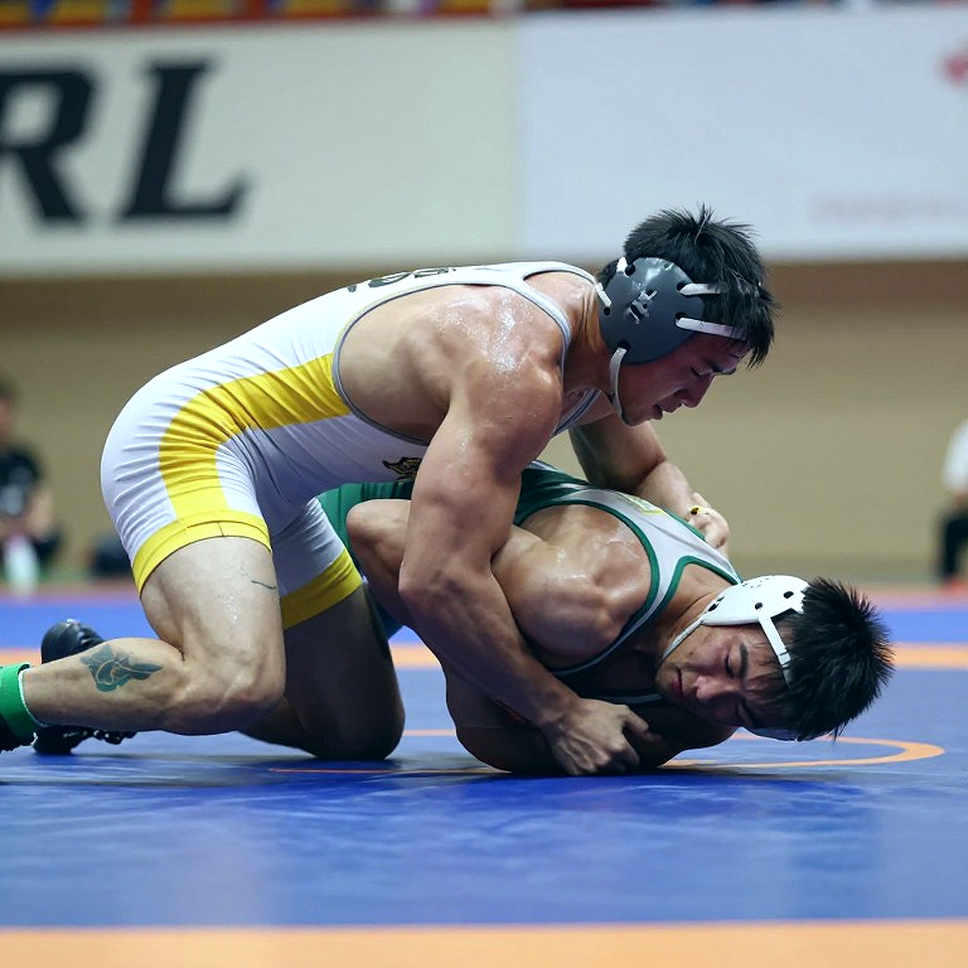
Technically, it is important to understand the two main styles. In freestyle, a wrestler may grab an opponent's legs, and attacks below the waist are legal. In Greco-Roman, any hold or attack below the waist is prohibited, so the style relies more on upper-body strength, balance and grip control. Bouts are contested over two periods, and victory comes through technical superiority (a large points margin), a pin, or on points. Rules on penalising passivity and 'passivity' calls have changed periodically, forcing wrestlers to adapt constantly.
India's wrestling ecosystem has become increasingly institutionalised in recent years. Sports Authority of India (SAI) training centres, institutions such as the National Institute of Sports in Patiala, and schemes like Khelo India have accelerated the process of identifying talent from the grassroots. Delhi's Chhatrasal Stadium and several Haryana akhadas have moved from being informal training grounds to parts of a formal pipeline. Foreign coaches have been appointed, training has become more scientific, and participation in international competitions has increased.
But the challenges are considerable. Injury management, a shortage of rehabilitation facilities and the health risks associated with weight-cutting pressures persist. Administrative instability and disputes involving the national federation have repeatedly disrupted athletes' preparations. At the grassroots, access to good mats, coaching and nutritional advice remains uneven—some states have a strong akhada culture, while many regions have none at all. Ensuring a safe training environment and equal opportunity for women wrestlers remains an active agenda.
The road ahead is clear. Wrestling is part of the 2028 Los Angeles Olympics, and India has an opportunity to widen its pipeline further. Developing Greco-Roman expertise, ensuring consistent performance at junior and under-23 levels, making sports science an integral part of training, and bringing weight management under medical supervision—these are four areas where substantive work remains. Producing a medallist is hard; building a system that produces medallists is harder still.
Indian wrestling's real achievement is that it did not allow tradition and modernity to collide, but instead joined them. The discipline of the akhada and the scientific precision of the Olympics—it is from the confluence of these two that the performances emerged that have made India a credible force in wrestling. The question is no longer whether India can win medals in wrestling. The question is how it turns that into a permanent, institutional and equitable system—one in which every talented athlete emerging from any akhada, regardless of state or gender, has a genuine opportunity to reach the mat.
संबंधित खिलाड़ी
अनुशंसित
Two Weigh-Ins, Eighteen Hours: Aman Sehrawat's Paris Semifinal Is a Body Report, Not a Scoreline2026-10-24
The Scale, the Payroll and the Calendar: Indian Wrestling's Transfer Window Never Closes2026-10-30
Eight Medals, Zero Gold: Wrestling's Arithmetic Begins at 100 Grams2026-10-24
The ₹6.2 Lakh Paddle and the Empty Pit: Indian Wrestling's Real Transfer Window2026-10-25
Wrestling's Real Transfer Market: The Paperwork, the Payroll and the State-Unit Maths2026-10-25