
BadmintonDakar Youth Olympics: For 15-Year-Old Tanvi Patri, the Real Question Is the Schedule, Not the Room
Dakar Youth Olympics: For 15-Year-Old Tanvi Patri, the Real Question Is the Schedule, Not the Room
दाकार यूथ ओलंपिक 2026 की बैडमिंटन स्पर्धा 1 नवंबर से शुरू हो रही है, जिसमें भारत की 15 वर्षीय तन्वी पाट्री हिस्सा ले रही हैं। आवास की कथित खराबी (एयर कंडीशनर नहीं, मच्छर) की जानकारी का एकमात्र स्रोत टाइम्स ऑफ़ इंडिया से बात करने वाले उनके पिता रबीनारायण हैं; IOC, दाकार 2026 आयोजन समिति या भारतीय ओलंपिक संघ की कोई प्रतिक्रिया उपलब्ध नहीं है। तन्वी के ग्रुप में ऑस्ट्रेलिया, मेक्सिको और दक्षिण कोरिया की खिलाड़ी हैं। वे अक्टूबर में मिस्र में हुई विश्व जूनियर चैंपियनशिप में 16 के दौर में बाहर हुई थीं और उसी दौरान बीमार भी पड़ी थीं। यह उनका छह हफ़्तों में तीसरा अंतरराष्ट्रीय टूर्नामेंट है, जिससे जूनियर खिलाड़ियों के कार्यभार प्रबंधन का सवाल उठता है। कमरे की हालत और आयोजकों की प्रतिबद्धता की स्वतंत्र पुष्टि अभी बाकी है।
The badminton competition at the Dakar Youth Olympic Games 2026 begins on November 1, and India's 15-year-old Tanvi Patri is among the country's youngest participants. But over the past few days, the loudest discussion has not been about her game — it has been about the athletes' rooms. Speaking to the Times of India, Tanvi's father Rabinarayan said the players were not getting air conditioning and were having to deal with mosquitoes. The remark was picked up by several sports websites, but the story's fundamental weakness is that it rests on a single source — the player's father, a stakeholder — and that too after passing through at least two rounds of retelling.
The chain of information is visible. The first source is the father's statement. The Times of India carried it, and other outlets then repeated it citing the Times of India. At no stage was there independent verification. There is no response from the International Olympic Committee, none from the Dakar 2026 organising committee, none from the Indian Olympic Association or any team official, and no corroboration or denial from any athlete or delegation from another country. There is no photograph of the rooms, no temperature record, no data on ventilation or humidity. In that situation, presenting 'no AC and mosquitoes' as established fact is overreach. The correct formulation is this: according to the Times of India, Tanvi Patri's father said so, and the organisers have not commented.
The story also mixes up levels of attribution. At one point it says Tanvi herself spoke about the challenges; everything concrete that follows is attributed to her father. It is not made clear whether the player or the parent spoke to the paper. For the reader this is not a small distinction, because a player's statement and a parent's statement are two different things.
The second question concerns the precision of 'heat'. Dakar is a coastal city, and in November daytime temperatures typically sit between 25 and 28 degrees Celsius. This is not peak heat. The report repeatedly uses phrases like 'very hot' and 'high temperatures' without a single figure. The real problem is probably not heat but stuffiness in an unairconditioned room, mosquitoes and poor ventilation. Lumping the two together makes it impossible to determine who is responsible and for what. This does not mean the problem is not real; it means the causal account is too blurred to support conclusions.
The real issue, which the report never touches, is athlete load management. The available timeline is striking. From mid-September to early October, the Asian Games in Aichi-Nagoya; in October, the BWF World Junior Championships in Egypt; and from November 1, the Dakar Youth Olympics. That is three international tournaments in roughly six weeks for a 15-year-old, with illness in between. This question is far bigger than whether a room has AC, and it points directly at India's junior badminton system. Who decided to enter a teenager in this sequence, who monitored her medically, and where did recovery time between events go — none of it is answered anywhere.
The story's frame is also set: 'Indian athlete runs into trouble abroad again.' Tied to complaints about accommodation and travel at the Asian Games, it becomes a continuous-victim narrative. The cost of that frame is that structural problems — Senegal's infrastructure, the Youth Olympics budget, the organisers' capacity — all dissolve into 'Indians suffered again'. The irony is that the father's expressions of confidence reinforce exactly this story: the romantic frame of resilience in adversity.
On the sport itself, Tanvi faces opponents from Australia, Mexico and South Korea in the group stage. The report gives no knockout draw or bracket, yet states that a Japanese player could await in the semifinal. No name, no bracket basis — the reader cannot test the claim. If the father inferred it from the draw, the draw should have been shown. Similarly, we are told Tanvi is an Asian U-17 champion and performed well at the senior nationals, but when, in which event, against whom and at what score is all missing.
The other, less-heard part of the picture is the World Junior Championships in Egypt, where Tanvi went out in the round of 16 and fell ill during the same period. This information is scattered across the report, so the reader feels they are reading the same event twice. And her potential final opponent in Dakar is named as Zhang Yixin, the junior world champion. The level of competition is high — which is why a line like 'the gold medal is in her sight' does not fit the fabric of the story. With a round-of-16 exit at the World Juniors, illness before the event, complaints about accommodation, a strong semifinal opponent and a likely world champion in the final, 'gold in sight' is editorial decoration, not fact. It weakens credibility rather than adding to it.
Some claims cannot stand without external verification. Whether the Dakar Youth Olympics badminton event really begins on November 1 is the timeline on which the whole report rests. Whether the organisers promised air conditioning decides whether this is a broken promise or simply the existing condition. Whether the AC shortage affects all rooms or only some cannot be settled by one source. And the claims about the World Juniors in Egypt and Zhang Yixin's title need confirming too, because they are linked.
It is also worth remembering that the earlier complaints about accommodation and travel at the Aichi-Nagoya Asian Games are a separate matter. Binding them to Dakar into one long saga of suffering is easy, but two events, two cities and two organising bodies cannot be merged into one responsibility.
In the end, whether something is genuinely wrong in Dakar can only be settled by independent verification. But one thing is already clear: if the conversation about AC and mosquitoes pulls attention away from this 15-year-old's exhausting six-week calendar, the illness in between and the support system junior players do or do not have, readers will miss the story that matters most.

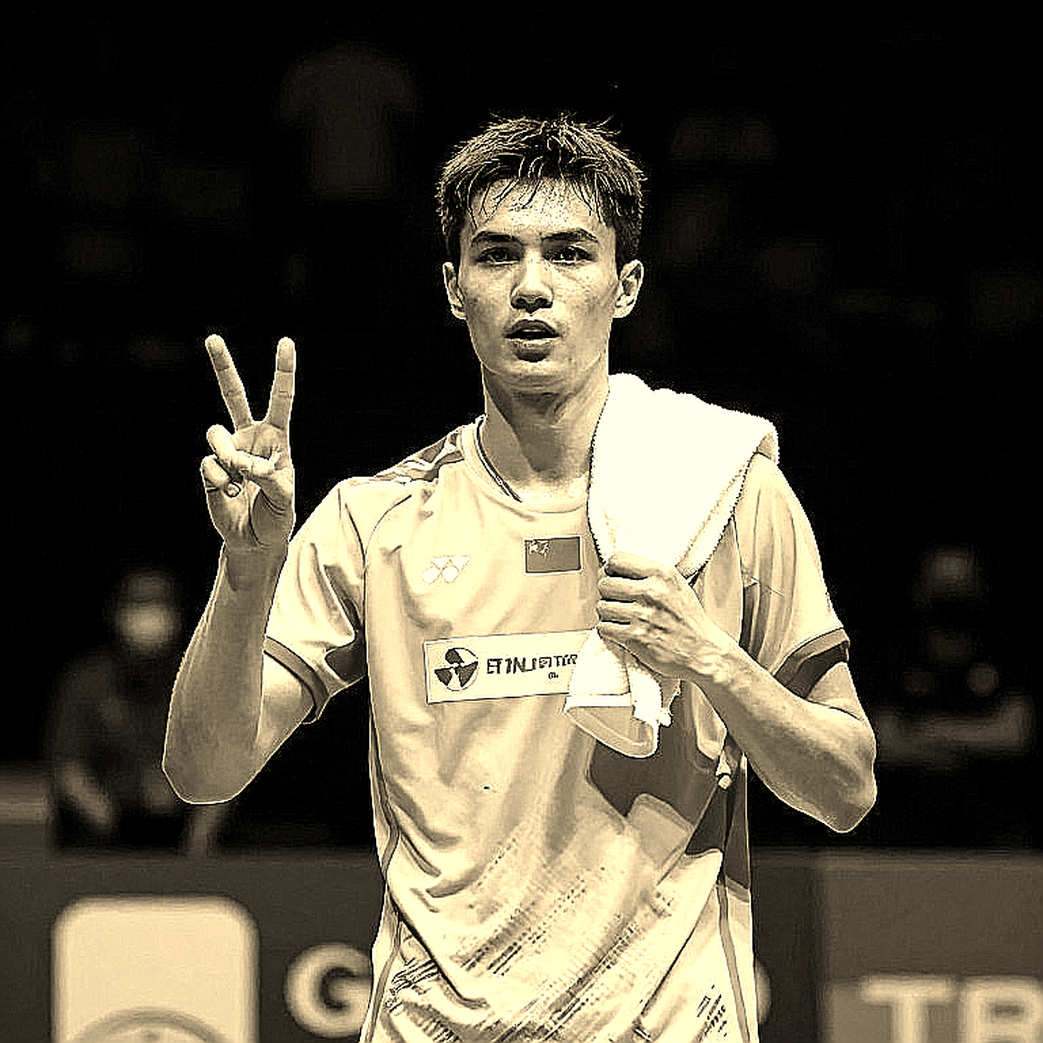
संबंधित खिलाड़ी
अनुशंसित
Hylo Open 2026: The Real Fingerprint of Lakshya Sen's Title Win, and the Unfinished Math of His Prize Money2026-11-03
Dakar Youth Olympics: For 15-Year-Old Tanvi Patri, the Real Question Is the Schedule, Not the Room2026-11-01
French Open 2026: A 73-Minute Scorecard Is a Survival Win, Not a Masterclass — And the Final Hands PV Sindhu a 0-10 Debt2026-10-25
Sindhu vs An Se Young: The 10-0 Is Settled in Rally Length, Not Inspiration2026-10-29
French Open 2026: Sindhu Won the Semifinal, But the 20-22 Game Is the Biggest Question Before the Final2026-10-25