
World CricketThe Cricket Economy: Capital Expansion, the Format Divide and Unanswered Questions of Governance
The Cricket Economy: Capital Expansion, the Format Divide and Unanswered Questions of Governance
विश्व क्रिकेट का केंद्रीय तनाव पूंजी और कैलेंडर के बीच है: आईपीएल फ्रैंचाइज़ी मालिकों ने यूएई, दक्षिण अफ्रीका, अमेरिका और कैरिबियन की लीगों में टीमें खरीदकर वैश्विक पोर्टफोलियो बना लिए हैं, जबकि आईसीसी का द्विपक्षीय श्रृंखलाओं आधारित कैलेंडर लगभग अपरिवर्तित है। आईसीसी राजस्व वितरण में भारतीय बोर्ड का हिस्सा सबसे बड़ा है, जिससे छोटे पूर्ण सदस्य देशों की घरेलू प्रथम श्रेणी संरचना कमज़ोर पड़ती है। एनओसी शर्तें और लीग विंडो का टकराव खिलाड़ी-कार्यभार तथा बोर्ड-लीग सत्ता संतुलन दोनों को प्रभावित करते हैं। टेस्ट क्रिकेट को विश्व टेस्ट चैंपियनशिप से ढाँचा तो मिला है, पर आर्थिक व्यवहार्यता कुछ ही देशों तक सीमित है। नए बाज़ारों में लॉस एंजिल्स 2028 ओलंपिक में क्रिकेट की भागीदारी और मेजर लीग क्रिकेट का विस्तार विकास के अवसर हैं, जबकि महिला फ्रैंचाइज़ी लीगों ने आय और पेशेवर रास्ता दोनों बढ़ाए हैं। मुख्य जोखिम शासन-पारदर्शिता, कैलेंडर असंतुलन और बढ़ती मैच-संख्या के साथ अखंडता-निगरानी की कमी से जुड़े हैं।
World cricket is passing through an unusual structural phase in which the commercial centre of the game, its competitive calendar and its governance system are moving at three different speeds. Franchise-league investment has grown rapidly over the past decade; the international calendar has stayed broadly unchanged. That imbalance is the central policy challenge in the sport today, because it strikes at three levels simultaneously: player workload, the revenues of smaller boards, and the long-term viability of Test cricket.
The debate begins with capital flows that have moved out of the Indian Premier League and into leagues elsewhere. IPL franchise owners now hold teams in the United Arab Emirates, South Africa, the United States and the Caribbean. Mumbai Indians expanded into MI Emirates and MI New York; Kolkata Knight Riders opened branches in Trinidad, Abu Dhabi and Los Angeles; Chennai Super Kings reached Texas and Johannesburg; Delhi Capitals built teams in Dubai and Seattle.
There are two sides to this expansion. On one hand it carries capital and professional management into markets where the domestic structure is not yet mature — local players get opportunities, broadcast quality rises, and a league can find a global audience in its first season. On the other, it creates a system in which decision-making power shifts to groups whose interests are not tied to a single national board but to a multinational portfolio. When one owner holds teams in four countries, questions of player availability, scheduling and even talent scouting start to be settled by the logic of that portfolio.
Running parallel is the question of ICC revenue distribution. Under the current cycle's model, the Indian board's share is the largest, and it is several times the total income of several smaller full members. This is not a new argument. Since the formation of the so-called Big Three, critics have claimed that the global body's structure tilts towards the countries that generate revenue rather than those that need support to keep the game alive. Both sides of that argument have merit.
The effects of distribution are direct. Boards without adequate funds preside over weak domestic first-class structures, shortages of coaches and physiotherapists, and a shortage of platforms on which young players can reach international level. The result is that a large share of talent either leaves the game or moves to countries where a league-based career is more secure. This is a migration not just of players but of an entire generation's experience of cricket.
The calendar is the knot at the centre of all this. The ICC's future tours programme has for decades been built around bilateral series, while leagues set their own windows — often in the same season that traditional international series are scheduled. The clearest symptom is that several boards no longer permit centrally contracted players to play leagues all year, and the conditions attached to No Objection Certificates are becoming political.
The NOC question is one of power, not procedure. A board holds the right to decide when and where a player plays, and that right is used against leagues that compete with the board's own. From the player's point of view it is a double bind: international cricket offers prestige and identity, leagues offer financial security. Holding both together is now possible only for the select few with enough market leverage to dictate terms.
Workload follows from the same logic. A modern cricketer's year is divided among international series across three formats, one or two domestic leagues and franchise tournaments. Virat Kohli, Joe Root, Kane Williamson and Steve Smith are among the players whose careers have run across all three formats for long periods — and that same group absorbs the sharpest scheduling pressure. The burden falls hardest on fast bowlers and wicketkeepers, because the physical stress does not fall when the format changes. Rising injury counts and the practice of resting players under the heading of workload management are the consequences of that pressure.
Amid all this, Test cricket's position is the most fragile. The World Test Championship has given the format a structure and an endpoint, which has created more meaning than bilateral series managed on their own. But the problem remains that Test matches are commercially profitable in only a handful of countries, and where they are not, the case for playing them is permanently contested. The five-day format rests on patience, planning and technique — precisely the qualities that become less valuable in fast-moving franchise cricket.
Two routes are proposed for protecting Test cricket. The first is to place a portion of the revenue earned from series between the largest nations into a common fund, so that playing Tests remains viable for smaller countries too. The second is to bind Test matches to a fixed, pre-announced calendar window so that audiences can follow them as a season. Both are rational, and both carry the same precondition: the major boards would have to surrender part of their commercial interest, which historically has never happened voluntarily.
Geopolitics complicates the picture further. Bilateral series between India and Pakistan have been suspended for years, and the consequences are not confined to those two countries — the effect runs through the entire Asian calendar and pushes major events towards neutral venues. When politics determines the shape of the competition, the assumptions behind commercial planning change with it.
Looking to new markets, the picture is somewhat more encouraging. Cricket's inclusion at the Los Angeles 2028 Olympics is a rare opportunity: after decades, the sport will be part of the Olympic movement, and the benefit can reach countries where cricket is not yet a mainstream game. Major League Cricket's expansion in the United States and the Olympic hosting point in the same direction.
But new markets have limits. Where cricket has no centuries-old cultural base, a league must build audiences, sponsors and local talent at the same time. Diaspora South Asian viewers form the first base for these leagues, but long-term success depends on whether the next generation there treats the sport as its own.
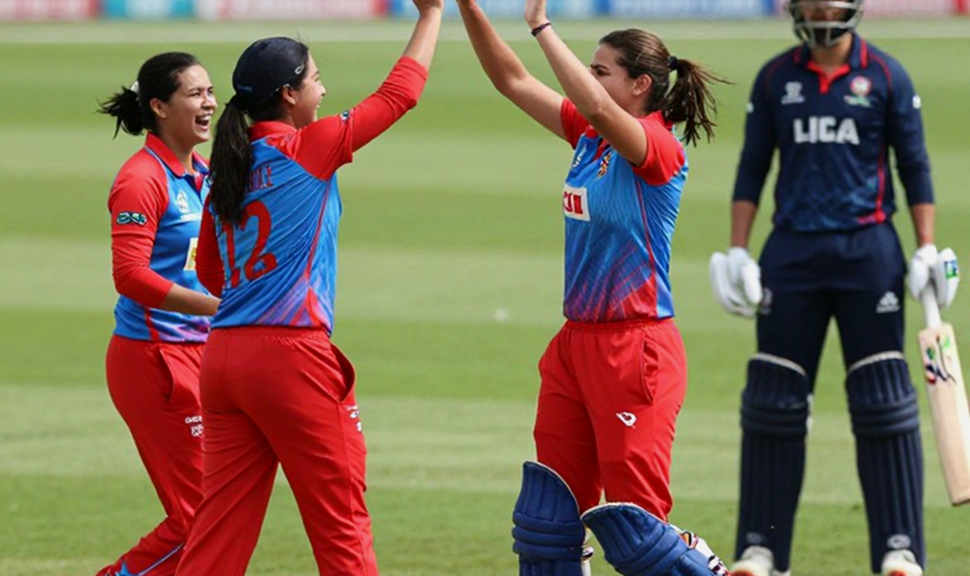
One dimension is routinely sidelined in this debate: women's cricket. The launch of women's franchise leagues in recent years has produced an unprecedented rise in player earnings and given the domestic structure a professional pathway. This is a rare case in which league capital has strengthened the base of the game rather than weakening it. The open question is whether the model remains sustainable once the initial enthusiasm settles.
Integrity and anti-corruption systems are part of the same architecture. As the number of matches and leagues grows, so does the scope for monitoring — but the resources for that monitoring do not grow at the same rate. It is a risk that tends to be ignored until an incident forces attention on it.
All of this has one centre: governance. Cricket's administrative structure remains essentially a federation of national boards, each representing its own interests. When commercial power is concentrated in a few markets and decisions require consensus, the pace of reform is naturally slow. Transparency belongs to the same question: revenue-sharing formulas, contract terms and calendar decisions are often not available in public detail.
The conclusion is not that cricket is in crisis, but that it is in a rare period of equilibrium. Capital has made the game global, given players financial security they never had, and opened doors to talent in new countries. The same capital has also produced a calendar in which Test cricket, domestic first-class cricket and international series involving smaller nations are steadily pushed to the margins. The next five years will determine whether cricket can carry all its forms together, or whether it drifts towards a model in which leagues become the main product and international cricket a seasonal exception.
संबंधित खिलाड़ी
अनुशंसित
A Scorecard That Stopped at 230/5: Pakistan's Trophy and Five Runs From the Top Three2026-11-01
The Lahore Ledger: Shadab Khan's last-wicket heist from 154/9 — and England's 20 unused balls2026-10-26
Fifty Wickets at 17.68 and No Contract: What Jimmy Anderson's Numbers Could Not Save2026-10-29
The Empty Column Behind 221/4: Starc's Six and South Africa's Conversion Problem2026-10-28
Maddinson's Catch Made the Headlines; Bellerive's First Day Was Decided by a 153-Run Stand2026-10-30