
Asian Cricket's Structural Squeeze: A Game Caught Between Calendar, Capital and Craft
यह रिपोर्ट एशियाई क्रिकेट की संरचना पर एक विश्लेषणात्मक पाठ है, किसी एक मैच का स्कोरकार्ड नहीं। मुख्य बिंदु: (1) एशिया एक क्रिकेट-अर्थव्यवस्था नहीं, कम से कम पाँच हैं - भारत, पाकिस्तान, बांग्लादेश, श्रीलंका और अफ़ग़ानिस्तान - और हर एक का वित्तीय आधार अलग है। (2) सबसे बड़ी असमानता यह है कि किसके पास अपना कैलेंडर तय करने की शक्ति है; यही तय करती है कि कौन कितने मैच खेलेगा। (3) हर अंतरराष्ट्रीय खिलाड़ी के पास तीन कैलेंडर होते हैं - बोर्ड का, फ्रेंचाइज़ी लीगों का और शरीर का; तीसरा किसी बैठक में मौजूद नहीं होता। (4) फ्रेंचाइज़ी क्रिकेट ने खिलाड़ी की आय का स्रोत बदला, लेकिन उसकी सुरक्षा का ढाँचा नहीं - यही चोट-प्रबंधन की राजनीति का स्रोत है। (5) आईसीसी का राजस्व वितरण बाज़ार-आधारित और विकास-आधारित तर्कों के बीच फँसा है; एशिया में यह बहस तीखी है क्योंकि सबसे बड़ा योगदानकर्ता और सबसे बड़ा हिस्सेदार एक ही है। (6) भारत-पाकिस्तान द्विपक्षीय क्रिकेट का अभाव राजनीतिक कारणों से है, किसी बोर्ड के फ़ैसले से नहीं। (7) टेस्ट, वनडे और टी20 के आँकड़े कभी सीधे तुलनीय नहीं होते; फ़ॉर्मेट एंकर के बिना हर निष्कर्ष अधूरा है। (8) ओस, पिच और डीएलएस जैसे संयोग-कारकों को प्रदर्शन के मूल्यांकन से अलग करना ज़रूरी है। (9) घरेलू क्रिकेट की गुणवत्ता दस साल बाद के अंतरराष्ट्रीय प्रदर्शन का सबसे भरोसेमंद पूर्वानुमान है, और यही सबसे पहले कटौती झेलती है। (10) तकनीक और डेटा बराबरी का साधन बनने के बजाय असमानता गहरा सकते हैं। निष्कर्ष: एशियाई क्रिकेट का संकट प्रतिभा का नहीं, संतुलन का है - और बाज़ार अपने आप संतुलन नहीं बनाता।
An Analytical Report, Not a Match Report
This piece is not about a single match, a single series result, or a single selection controversy. It is about the structure inside which every Asian cricket match, contract and selection decision is made. The reason is simple: no cricket analysis can begin without a format anchor. Test, ODI and T20 numbers are never directly comparable. Until the format, venue, time frame and opposition are fixed, commenting on a result is a discipline failure. What follows, therefore, is a structural reading of the Asian cricket landscape - not a scorecard.
One Continent, Wrongly Told as One Story
Asia is not one cricket economy. It is at least five, each with its own political framework, financial base and structural weakness. India is one extreme of scale and market power; Pakistan another of talent supply and political volatility; Bangladesh the gap between expectation and delivery; Sri Lanka a slow rebuild; Afghanistan a dramatic acceleration. Viewing all five through one lens is like treating England, Australia and Ireland as a single system.
The difference is not only statistical. It is about who controls the calendar. India can sustain its own schedule because its domestic market is large enough. Pakistan, Bangladesh and Sri Lanka depend on bilateral series and ICC transfers. Afghanistan depends almost entirely on whether bigger boards want to play it. That asymmetry is the central structural fact of Asian cricket, and it matters more than any individual statistic.
Three Calendars, One Player
A modern cricketer has three calendars: the national board's, the franchise leagues', and the body's own - which is never present in the meeting room. In Asia this triangle is especially sharp, because the region hosts both the busiest bilateral economy and the densest franchise economy.
Virat Kohli and Rohit Sharma spent the bulk of their careers balancing all three formats with franchise commitments - an achievement, but also a symptom of a system that demands constant availability. Babar Azam and Shaheen Afridi face a doubled pressure, since their board's financial model rests on them. Rashid Khan is Afghanistan's most exportable asset and the clearest example of how fast a player from a small board becomes a global franchise property - and how complicated his availability for the national side then becomes.
The direct cost is quality, especially in Test cricket, which demands rhythm, patience and physical tolerance that the franchise game actively discourages. Switching repeatedly between formats is not free; the technical adjustment cost cannot be hidden.
Workload Management and NOCs: Technical Term, Political Issue
Workload management is technically about balancing play, training and recovery to keep injury risk acceptable. Politically, it is about who decides when a player rests. When a board says a player is unavailable for 'workload' reasons, that is often not a scientific sentence but a financial and strategic one.
This is where the No Objection Certificate becomes a power instrument. On paper it is administrative. In practice it lets boards control player earnings, and lets players leverage their market value. The tension is sharpest where a board has no large league of its own: players want foreign leagues, boards invoke national commitment. That argument is not always wrong, but it is always convenient.
The Gravity of Franchise Capital
The Indian Premier League is the centre around which everything else orbits - not a controversy, simply market geography. The league with the largest broadcast market and deepest player pool sets the price of talent. Other Asian leagues compete with that gravity or attach themselves to it.
The Pakistan Super League is strong in its own market and gave domestic talent a platform it lacked. ILT20 has made the UAE a genuine alternative hub. The BPL and LPL are still building franchise credibility, but both face the same constraint: limited domestic market depth, which means shorter windows and thinner overseas participation.
One structural gap stands out: franchise cricket changed where player income comes from, but not how players are protected. A franchise wants its most expensive signing on the field. A national board wants him available next year. Both interests look similar but operate on different time horizons - and that gap is the source of all injury-management politics.
Revenue Distribution and Governance
The ICC's most contested function is not running cricket but dividing money. The debate over market-weighted revenue is long-running and public. The market argument is not wrong: whoever generates value demands a share. But sporting governance has a second argument - competition survives only if weaker systems get resources to stay viable. A purely market-based distribution risks turning small boards into mere hosts.
In Asia the debate is sharper because the largest contributor and largest shareholder are the same country. That does not make the system corrupt; it means the system has no natural balancing mechanism. Balance only emerges if large boards recognise their long-term interest: competition survives only if the field stays competitive.
India-Pakistan: Politics Over the Calendar
The region's greatest economic paradox is that its most valuable fixture happens least. Bilateral series have not been played for years; the teams meet only in multi-nation events. This is not a cricket-administration choice but a consequence of political relations, outside any board's control. Yet it shapes broadcast value, ticket revenue and emotional investment.
There is a quieter effect: young players from both countries do not get sustained exposure to each other. Rivalry is entertainment, but it is also learning - reading an opponent's method, deciding under pressure. When that experience is artificially limited, both systems develop more slowly. This belongs to the structure, not any document.
Any public comment here is politically sensitive. Analysis must be clear that it addresses sporting structure, not political sides - a boundary deliberately drawn in this report.
Afghanistan: Low Resources, High Velocity
Afghanistan is the region's most interesting structural story because it challenges the assumption that international success requires a large domestic system. The model is different: limited infrastructure, an intensely concentrated talent pool, and a spin tradition that is lethal in helpful conditions. Rashid Khan personifies it - global franchise success that gave an entire national system visibility.
The model has a clear ceiling. A concentrated pool can rise quickly but cannot stay stable. When a system depends on a handful of players, one injury reshapes the plan. Long-term stability needs domestic expansion, age-group continuity and a durable coaching chain - all of which cost money small boards do not have. The question is not how fast Afghanistan rose, but how long it can stay up.
Bangladesh: The Talent-Expectation Gap
Bangladesh is the case where talent is not scarce but consistency is. There have been strong individual performances and a passionate audience, yet results move in waves rather than a line. A major structural cause is the gap between domestic and international cricket - A-team fixtures, age-group pathways and first-class continuity.
The second cause is expectation. Long-waiting audiences read every win as a turning point and every loss as a crisis. That emotional cycle reduces the risk tolerance players need to change technique. A young batter will not rebuild his method if two failures mean being dropped. Selection policy is therefore development policy.
Sri Lanka: The Slow Rebuild
Sri Lanka's system has lost and gained much within a generation. The tradition remains strong - spin, the sweep, the ability to turn the ball both ways. Wanindu Hasaranga is a modern expression of it, and his franchise popularity shows how valuable small-board talent is in the global market. But a few stars shining is not the same as collective strength.
The real constraint is financial. When board revenue is limited, the first cuts fall on domestic cricket, physiotherapy, data analysis and age-group programmes - precisely what pays off ten years later. It is a familiar fiscal trap: sacrifice the long term for short-term balance, then watch short-term results worsen. The exit route is external revenue - from leagues or ICC transfers - which is why presence in global cricket politics is existential, not cosmetic.
Associate Nations: Nepal, Oman and the Gulf
The fastest-changing picture is among associate members. Nepal's audience enthusiasm is extraordinary and its team has produced memorable results on thin resources. Oman and the UAE have built hosting infrastructure and invested in player development and administrative professionalism.
A structural question cannot be avoided: when a national side is substantially composed of players born and raised elsewhere, the definition of 'national' becomes contested. The debate is emotional but also practical - eligibility rules, prioritising domestic development, and balancing short-term results against long-term systems. No associate nation escapes the question, and there is no easy answer.
Format Incomparability: One Sport, Three Games
No cricket analysis is complete until the format is fixed. Test averages and T20 strike rates do not belong in the same table. A high T20 strike rate says nothing about Test survival, because the skills demanded differ: lofting the ball is a reward in one, a risk in the other. Similarly, a fast bowler's T20 economy says nothing about a fifth-day pitch. Analysis that ignores these boundaries is not precise - only confident.
In Asia the problem is acute because all three formats run almost simultaneously. Any evaluation of a player must state the format, the conditions and the opposition. Without those three, every conclusion is incomplete.
Conditions: Pitch, Dew and Weather
Dew is a foundational Asian variable. In evening matches it makes the ball skid, reduces a spinner's grip, and makes second-innings batting easier. The consequence is the weight of the toss - where dew is decisive, winning the toss is close to winning half the match, and that is chance, not skill.
This does not make dew-affected cricket unfair; it means the analysis must separate luck from performance. The same applies to pitch character - spin-friendly, bouncy, slow. The same score is outstanding on one surface and ordinary on another. Weather adds DLS: rain-affected results are decided by revised targets, and revised targets are not always unanimous. Treating such a result as proof of performance is technically wrong, because the conditions of the contest had changed.
Domestic Structure: Where Talent Is Built or Broken
International cricket is the showcase; domestic cricket is the laboratory. Quality varies enormously across Asia. Where domestic tournaments are strong, new talent arrives ready; where they are weak, players spend years learning at international level - years lost.
One reason is economic: domestic cricket is rarely self-sustaining and must be funded from board revenue, so it is the first thing cut. Another is competitive balance: if one or two teams dominate, the tournament stops functioning as a development mechanism.
A good domestic system provides three things: a reliable measure of performance, a safe place to fail, and constant competitive pressure. Together they create the environment in which a player can change technique without fear. Where that safety does not exist, players play safe - and safe play is never excellent.
Women's Cricket: Fastest Change, Largest Responsibility
The expansion of women's cricket is the region's most meaningful structural development in recent years. India's women's franchise league gave players a platform that did not exist before - professional contracts, media coverage and a full season. Smriti Mandhana and Harmanpreet Kaur represent visibility that creates a visible pathway for the next generation.
A warning is necessary. Rapid commercialisation naturally directs attention to the largest markets. If that trend continues, women cricketers from smaller Asian nations will not get the same opportunities. A balanced system requires development programmes that genuinely reach talent - which means both funding and fixtures.
Data, DRS and Technology: Assistant or Authority
Technology has changed decision-making - DRS, Snicko, UltraEdge, ball tracking. In theory these increase fairness. In practice they create a new problem: decisions are no longer fully objective but semi-objective. Which technology is available, which camera angle exists, how many reviews are permitted - all shape outcomes.
The psychological effect is larger. A player who knows a decision can be reviewed changes how he plays. In Asia, where many series are played at less-equipped venues, the inequality is stark: one sport, different levels of adjudicative infrastructure.
There is also interpretation. Every team now has analysts, but having data and asking the right question of it are different things. For a small board, hiring analysts is a major investment - often cut precisely when resources tighten. Technology, then, can deepen inequality rather than equalise it.
Betting, Fantasy and Integrity: The Line Not to Cross
This is the region's most sensitive subject, and analysis must be extremely careful here. The legal line between fantasy sport and betting is drawn differently in each country and has been contested in several. Without a specific verified event, drawing conclusions would be improper - and that is an explicit limit of this report.
What can be said is structural. Where audience participation is intense and monitoring frameworks are weak, integrity risk naturally rises. The answer is not only punishment but transparency: independent anti-corruption units, player education, and financial-flow monitoring. All three are expensive, and most expensive for small boards - so integrity, too, becomes a resource question.
Broadcast and Market: Where Value Is Created
Cricket's economic engine is broadcast rights. Ticket sales are a fraction; the real value is created on screen. Boards in countries with larger television and digital audiences therefore have greater bargaining power - even when their team is performing poorly. The sport's value is set less by results than by reach.
For smaller boards, a good broadcast deal is a lifeline. Sri Lanka, Bangladesh and Afghanistan cannot easily demand more than their domestic market yields, so they often sell as part of a package with a larger board. That is profitable in the short run; in the long run it prevents them from building a distinct identity and a distinct market price.
Risk Matrix
Sporting risk. The biggest is calendar overload: more matches means less recovery, and less recovery means more injury. The risk is highest for players from teams with few alternatives.
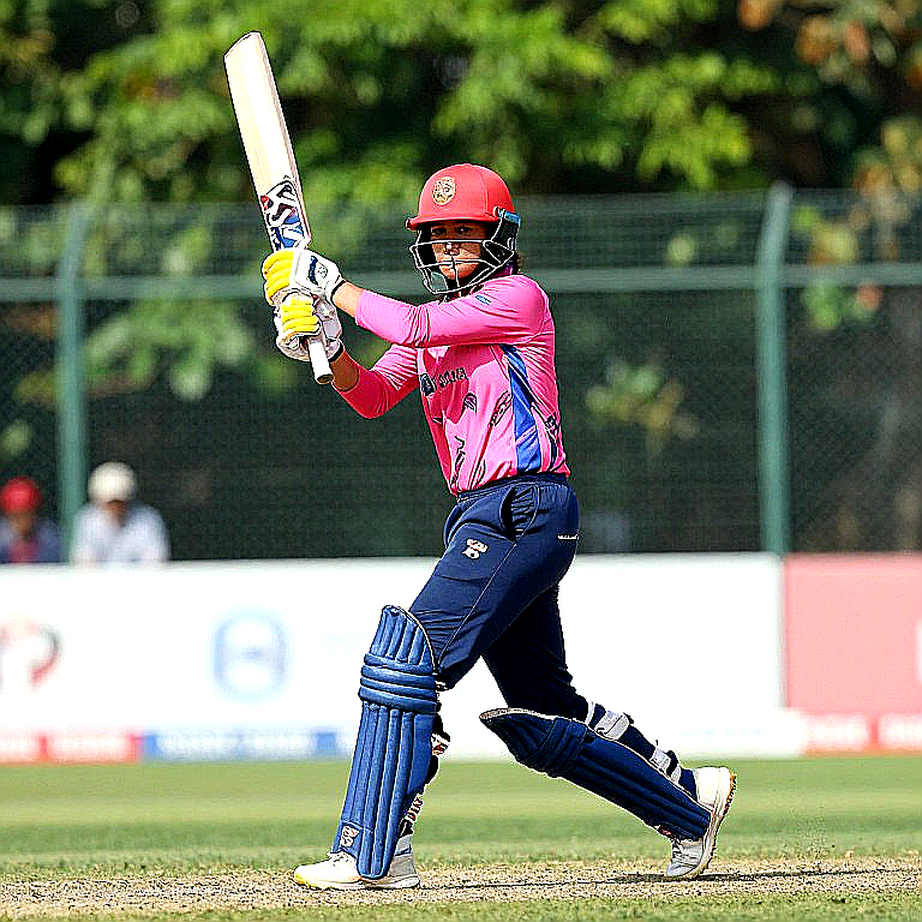
Personnel risk. When a team's structure depends on a handful of players, one injury destabilises everything. This is sharpest where bench depth is thin - and bench depth is a direct function of domestic quality.
Financial risk. Small boards have concentrated revenue: ICC transfers, a few bilateral series, hosting contracts. One shift destabilises the whole budget.
Governance and integrity risk. Unequal monitoring and transparency frameworks are a structural risk even absent a specific incident.
Public-opinion risk. Where emotional investment is intense, every loss becomes a crisis and every win a revolution - damaging both morale and selection continuity.
Systemic risk. Calendar, politics and market are interlinked; a shock in one propagates through the system.
Conclusion: No Natural Balancing Mechanism
The structural question in Asian cricket is not talent but balance. Talent is abundant: scale in India, supply in Pakistan, velocity in Afghanistan, passion in Bangladesh, tradition in Sri Lanka, hunger in Nepal. What is missing is a framework that sustains all of them together.
The market does not balance itself; it allocates capital where returns are highest. Governance exists to modify that tendency so competition survives. This is not a moral argument but an argument about long-term self-interest - a sport in which only two or three teams can win gradually loses its audience.
Signals to Watch
First, calendar windows: whether franchise windows expand at the expense of international fixtures. Second, the direction of ICC revenue distribution - market-based or development-based. Third, domestic investment: the share of board budgets going to domestic cricket, age-group programmes and coaching. Fourth, women's cricket expansion: one market or the whole continent. Fifth, board posture on workload and NOCs: who is gaining control over player availability.
Final Note
Cricket's beauty is that one ball can turn a game. But that ball arrives inside a structure - a pitch, a format, a calendar pressure, a development system. The argument of this report is that we must understand the structure before we can give meaning to the moment. Analysis that skips the structure and jumps to the result is not analysis but inference - and inference needs discipline so that it is never presented as fact.